
What Your Check Engine Light Is Telling You (and When to Worry)
Steady or flashing, the check engine light always means your car has stored a trouble code. Here is what it usually means, the common causes, and how a real diagnosis works.
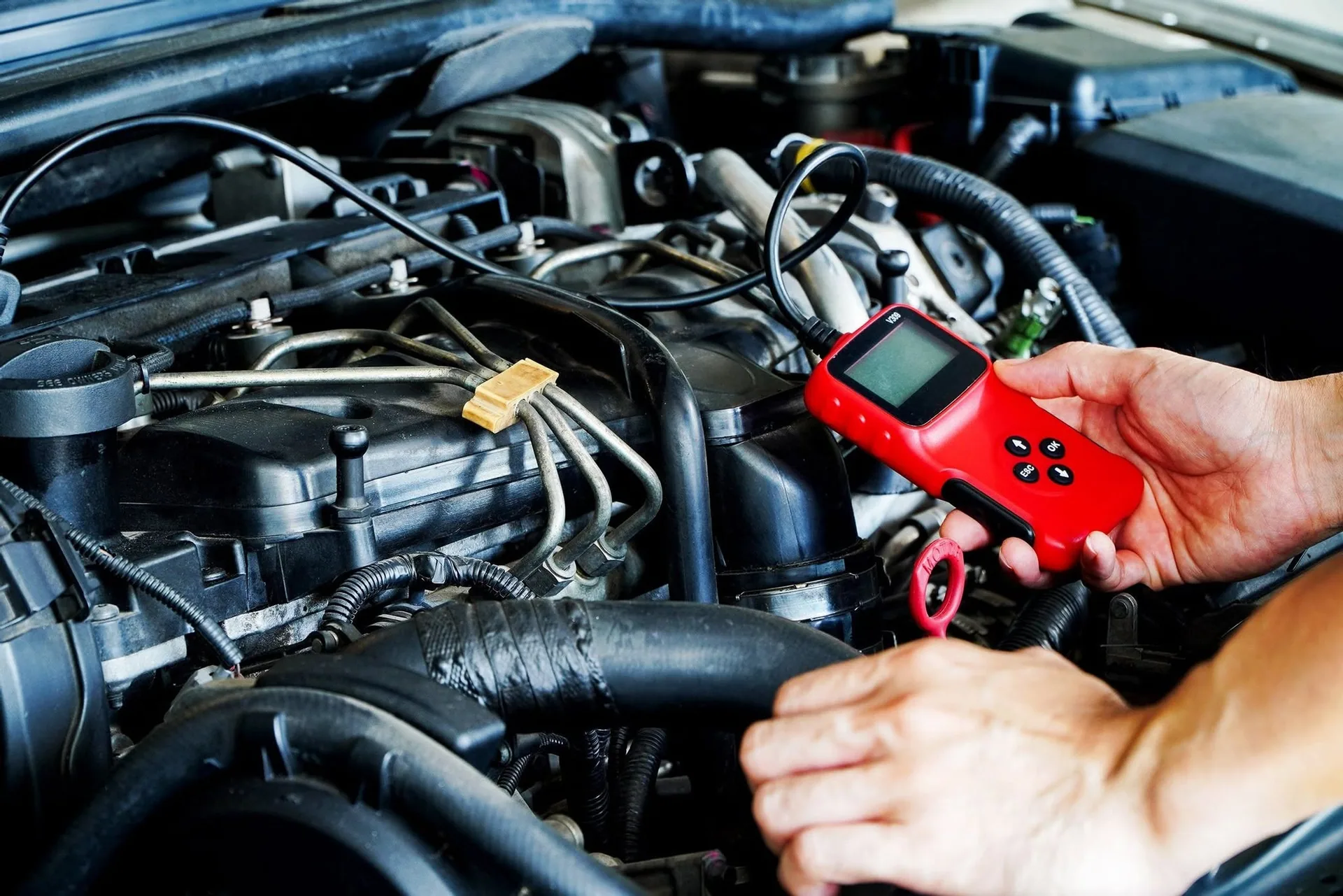
Few things on a dashboard cause as much worry as the check engine light. It comes on without warning, it does not tell you what is wrong, and it can mean anything from a loose gas cap to a problem that needs attention today. The good news is that the light is not a mystery to a shop with the right equipment. It is your car's way of saying it has stored information about a problem, and the job of a proper diagnostic visit is to read that information and find the real cause.
At Milad Nukho and Sons, we have been diagnosing cars at our Yonkers shop since 1981. This guide explains what the check engine light actually means, the difference between a steady light and a flashing one, the most common causes, and what happens when you bring your car in for vehicle diagnostics.
What the check engine light is telling you
Every gas-powered car and light truck sold in the United States since 1996 has an onboard diagnostic system, known as OBD-II. Its job is to watch the engine, the emissions system and a long list of sensors while you drive. When it sees a reading outside the range it expects, it stores a trouble code and, in many cases, turns on the check engine light.
That code is a starting point, not an answer. A code might tell you that a cylinder is misfiring or that the fuel mixture is running lean, but it does not tell you why. A misfire, for example, can come from a worn spark plug, a failing ignition coil, a clogged injector, a vacuum leak or a mechanical problem inside the engine. Replacing parts based on the code alone is how drivers end up paying for repairs that never fix the problem.
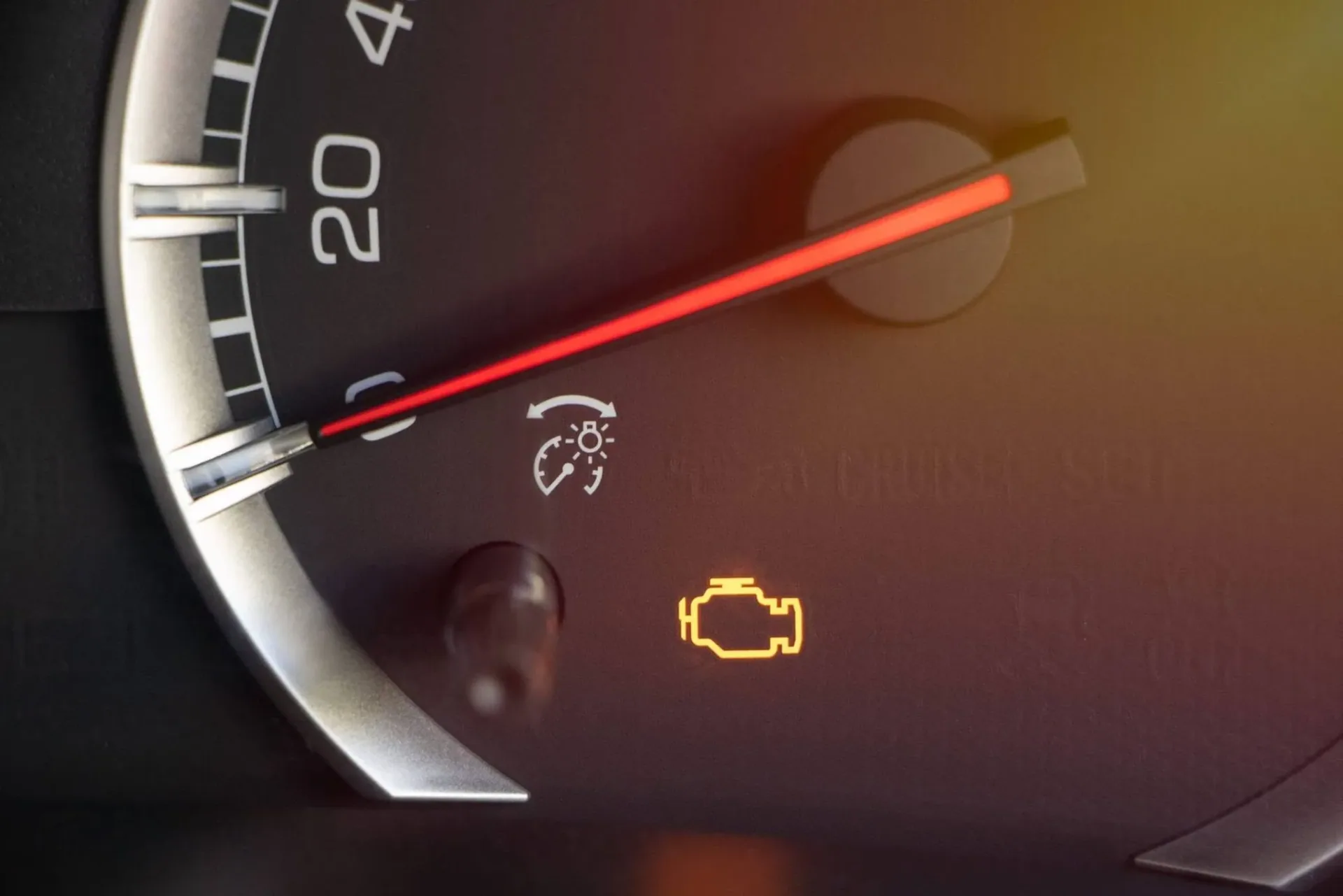
Steady light or flashing light: why it matters
The way the light behaves tells you how urgent the problem is.
A steady check engine light means the system has found an issue worth scheduling a scan for soon. The car may drive normally, but something is out of range, and leaving it for months can let a small problem grow. It can also hide a second problem: if the light is already on, you will not notice when a new fault appears.
A flashing check engine light is more urgent. It usually signals an active engine misfire. Unburned fuel from a misfiring cylinder can quickly overheat and damage your catalytic converter, which is one of the more expensive parts of the exhaust system to replace. If your light is flashing, pull over when it is safe and have the vehicle looked at right away rather than waiting.
Common reasons the light comes on
These are some of the causes we run into regularly. Each one needs to be confirmed with testing, but knowing the possibilities helps explain why a proper diagnosis matters.
A loose or worn gas cap
The fuel system is sealed to keep fuel vapor from escaping. A gas cap that was not tightened, or one with a worn seal, can let the system detect a vapor leak and turn the light on. It is the simplest fix on this list, and worth checking yourself first: tighten the cap until it clicks. The light will not go off immediately, but if that was the cause, it should clear on its own after some driving.
Oxygen sensors
Oxygen sensors measure how much unburned oxygen is in the exhaust, which helps the engine computer adjust the fuel mixture. As they age, they can respond slowly or give bad readings, and fuel economy often suffers before anything else seems wrong.
Ignition problems and misfires
Spark plugs and ignition coils wear out over time. When one fails, a cylinder stops firing properly and you may feel a shake at idle, a stumble when accelerating, or a loss of power. This is the most common cause of a flashing light.
Air and vacuum leaks
The engine computer measures the air coming into the engine to decide how much fuel to add. A cracked hose, a leaking intake gasket or a faulty airflow sensor throws that calculation off, which can lead to rough running and lean codes.
Catalytic converter and emissions components
The catalytic converter cleans up the exhaust before it leaves the car. When it stops working efficiently, often because of an earlier misfire or an engine that has been running rich, the system flags it. Problems with the EGR or evaporative emissions systems can trigger the light too.
Electrical and charging faults
Modern engines rely on dozens of sensors and a lot of wiring. A corroded connector, a damaged wire or a weak charging system can produce codes that look like a sensor failure when the real cause is electrical. That is why our process includes testing the battery, alternator and wiring, and why many diagnostic visits lead to automotive electrical repair rather than a new sensor.
Other signs your car needs a diagnostic check
The check engine light is not the only signal. It is worth having a full diagnostic scan done if you notice any of these:
- The car hesitates, stalls or idles rough at stoplights
- Fuel economy has dropped noticeably without an obvious reason
- The transmission shifts hard, slips or hesitates between gears
- Strange noises, smells or a burning odor show up while driving
- Another dashboard warning light has turned on
- You are buying a used car and want a pre-purchase inspection before signing anything
How we diagnose your car
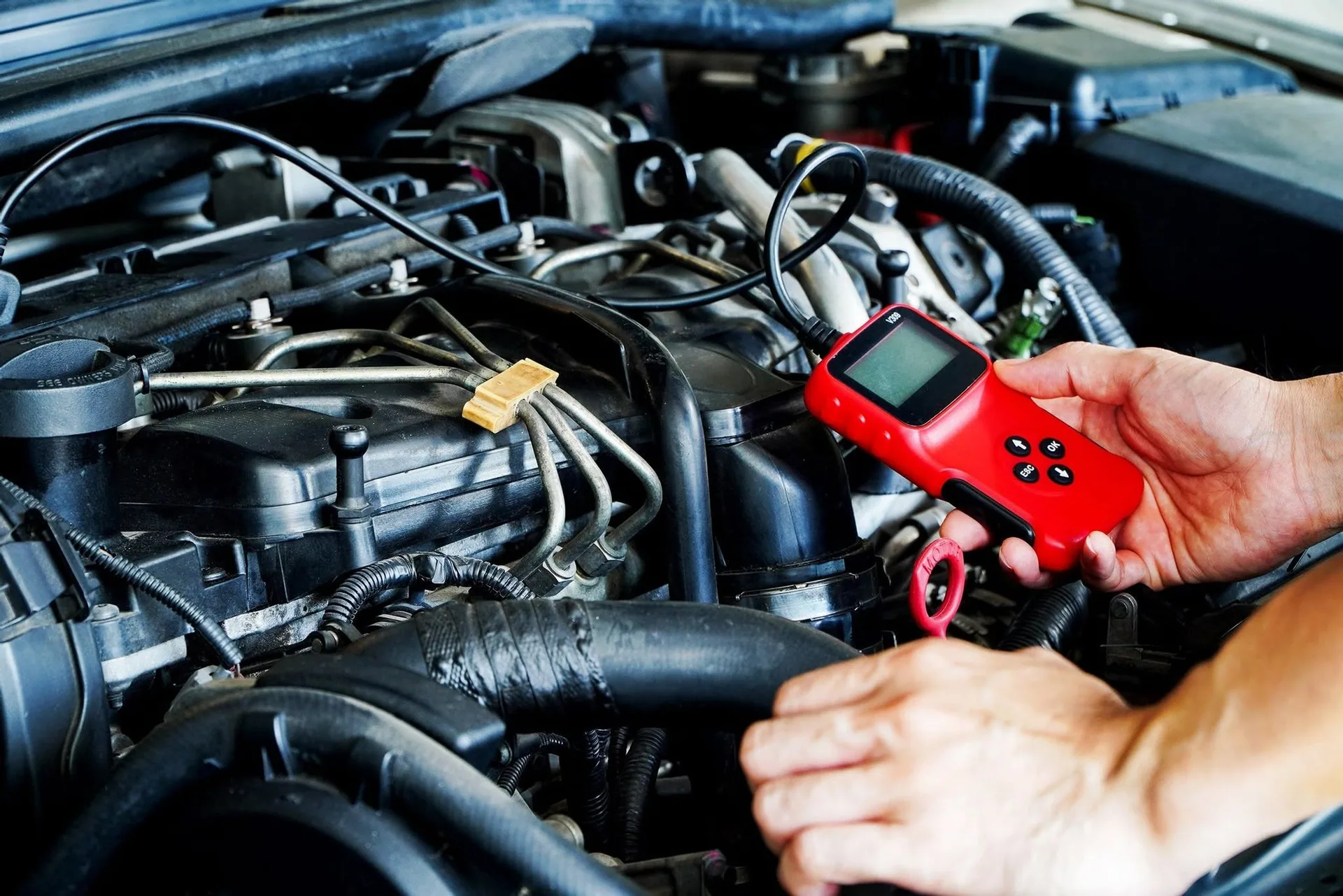
Every diagnostic visit starts with listening to what you have noticed, then moves through a structured process so nothing gets missed.
- Initial consultation and code scan. We talk through your symptoms first: when the light came on, how the car feels, and anything else you have noticed. Then we connect our scan tools and pull any stored trouble codes from the onboard computer.
- Live data and electrical testing. Codes alone do not tell the whole story, so we watch live sensor readings while the engine runs and test the battery, alternator and wiring. This step catches problems a code scan by itself would miss.
- Hands-on inspection. Our techs physically inspect the components the scan points to, whether that is a sensor, a belt, a hose or a connector. This confirms the diagnosis before we recommend any repair.
- Clear explanation and repair plan. We walk you through what we found in plain language, show you what is actually failing, and give you an honest, itemized estimate. Nothing gets fixed without your approval first.
Most check engine light diagnostics take between 30 minutes and an hour. More complex electrical or intermittent problems can take longer to isolate, and we will give you a time estimate up front once we hear your symptoms.
What a diagnostic visit costs
We charge a diagnostic fee to cover the scan, the live data testing and the hands-on inspection involved in finding the real problem. If you choose to have us complete the repair at our shop, that fee is credited toward the cost of the work, so you never pay twice for the same visit.
Why a free code read is not the same as a diagnosis
Many parts stores will read your codes for free, and that can be useful to know what kind of problem you are dealing with. But a code read gives you the code, not the cause. Our computer diagnostics process cross-checks the codes against live sensor data and a hands-on inspection, which is what gives us factory-level accuracy without sending you across town to pay dealership labor rates. Whether you drive a daily commuter, a hybrid or a European import, our diagnostic equipment covers the same systems the manufacturer's own service department checks.
Does an independent diagnosis affect my warranty?
No. Using an independent repair shop for diagnostics or repairs does not void your factory or extended warranty. Federal law protects your right to choose where your vehicle is serviced, and we keep full documentation of every diagnostic and repair for your records.
Can I keep driving with the light on?
If the light is steady and the car feels normal, it is usually safe to drive to the shop, but schedule the visit soon. If the light is flashing, if the engine is shaking or losing power, or if you see a temperature or oil pressure warning at the same time, pull over when it is safe and get the car looked at before driving further. Continuing to drive with an active misfire is how a repairable problem becomes a much more expensive one.
Get a straight answer from an owner
There is always an owner on the floor while your car is being diagnosed, not just a service writer relaying information. You get direct answers from someone with decades of experience. We also see a lot of cars that other shops turned away or sent to the dealer, and more often than not, we can find the problem and fix it right the first time.
Walk-ins are always welcome at our shop at 578 S Broadway in Yonkers, Monday to Friday from 7am to 5pm, or call (914) 969-9023. We serve drivers across Yonkers, the Bronx, Riverdale, Westchester and New York City. Learn more about our vehicle diagnostics, or schedule a diagnostic check online.